Nepali cooking is hard on a kitchen. Daily tadka, deep-fried snacks, pressure-cooker steam and mustard oil smoke leave a sticky film on walls, cabinets and ceilings that no amount of scrubbing fully removes. A kitchen chimney catches that smoke and grease at the stove before it spreads. Here is how to choose one that copes with the way you actually cook.
Chimney or exhaust fan?
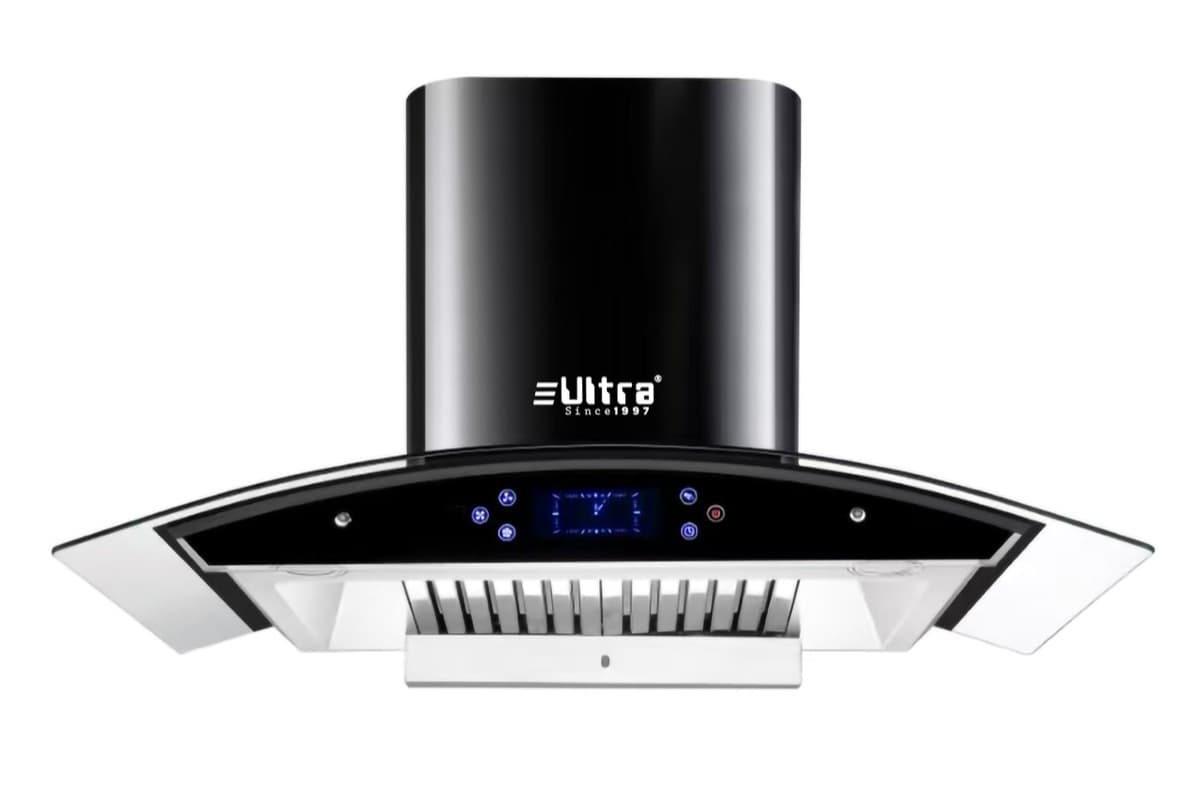
An exhaust fan in the wall pulls air out of the whole room, so smoke drifts across the kitchen first and grease still settles on every surface on the way. A chimney sits directly above the burners and captures smoke and oil at the source, trapping grease in its filters before the air is ducted outside. For kitchens where frying is a daily habit, a chimney makes a visible difference within weeks.
1. Width: match it to your stove
Choose a chimney at least as wide as your gas stove. A 60 cm hood suits a two-burner stove. A 75 cm or 90 cm hood suits three- and four-burner stoves, and a hood slightly wider than the stove catches more of the rising smoke.
2. Suction: how hard it pulls
Suction is rated in cubic metres per hour (m³/h). Our models range up to 1,200 m³/h. Around 1,000 m³/h handles a smaller kitchen with moderate cooking. If you fry every day, cook a lot of tadka, or have an open kitchen joined to the living room, choose 1,100 to 1,200 m³/h so smoke and smell clear before they spread.
3. Filters: washable metal is the safe choice
Baffle and cone filters are stainless steel and washable, so there are no replacement filters to buy. They handle heavy oil well, which is why every chimney we stock uses a washable metal filter. Wash them in warm soapy water every few weeks if you fry often.
4. Auto-clean: useful, not magic
Heat auto-clean warms the inside of the hood so built-up oil loosens and drains into the oil cup. It cuts down on scrubbing in heavy-frying kitchens, but you still need to wash the filters and empty the oil cup. Treat it as a time-saver, not a replacement for cleaning.
5. Motor and body
A fully sealed copper motor keeps grease out of the windings and tends to last longer in an oily kitchen. A-grade stainless steel and tempered glass bodies cost more but resist stains and are easier to wipe. If budget is tight, spend on suction and a good motor first, and on looks second.
Plan the duct before you buy
Most chimneys in Nepali homes are ducted: they push air outside through a pipe and a hole in the wall. Every metre of pipe and every bend reduces suction, so the best setup has a short, straight run to an outside wall. Several of our models have a 150 or 160 mm outlet and come with a 1.5 m pipe. If your stove is on an inside wall, talk to us before buying so the hood position, outlet size and pipe route work together.
Mounting height
Mounted too high, a chimney misses the smoke; too low, it gets in the way of cooking. Above a gas stove, a height of roughly 65 to 75 cm from the burner to the bottom of the hood is typical, but always follow the installation manual for your specific model.
A simple cleaning routine
- Every week: wipe the outside of the hood and empty the oil cup if you fry often.
- Every few weeks: soak and wash the baffle or cone filters in warm soapy water.
- Regularly: run heat auto-clean on models that have it.
Warranty and installation
Every chimney in our catalog carries a 1-year warranty. We install chimneys in Kathmandu Valley and deliver across Nepal, mounting the hood, routing the duct and checking suction before we leave.
Compare 60, 75 and 90 cm models from ULTRA, ULTRATEC and Pristine on the kitchen chimney price page, or contact us with a photo of your kitchen for a recommendation.