LED lighting is the cheapest energy upgrade most homes can make, but the choice of bulbs, panels and tubes can be confusing. This guide covers what to check before you buy, using the I-VOLT and ULTRATEC lights we stock as examples.
1. Check the base: E27 or B22
Before anything else, look at the holder in your ceiling or lamp.
- E27 is a screw base: you twist the bulb in clockwise.
- B22 is a bayonet or "pin" base: you push the bulb in and turn it slightly to lock its two pins.
Both are common in Nepal, often in the same house. A bulb with the wrong base will not fit, so it is worth checking each holder before buying in bulk.
2. Choose the colour: warm or cool white
Colour temperature is measured in kelvin (K).
- Warm white (around 3000K) gives a yellowish, relaxed light. Good for bedrooms, living rooms, prayer rooms and restaurants.
- Cool white (around 6500K) gives a bright, bluish-white light. Good for kitchens, study tables, offices, shops and workshops.
Our I-VOLT warm range runs from 3W to 50W at 3000K, and the cool white bulbs and panels are 6500K.
3. Pick the wattage for the room
LED wattage tells you power use, not brightness, but within one range more watts means more light. As a rough guide for a standard room:
- 3 to 5W: night lights, prayer rooms, passages, bathrooms.
- 7 to 12W: bedrooms and small rooms.
- 15 to 20W: living rooms and kitchens.
- 30 to 50W: shops, halls, garages, workshops and high ceilings.
If you are replacing old bulbs, an LED gives roughly the same light as an incandescent bulb of several times its wattage, and noticeably more than a CFL of the same wattage.
4. AC or DC? Bulbs for solar home systems
Normal bulbs run on 220V AC mains. If you have a small solar home system or a battery, DC bulbs like our I-VOLT 2W to 5W 12V range run directly from the battery without an inverter, which avoids conversion losses and keeps a small battery lasting through the night. Make sure the bulb voltage matches your battery system.
5. Panel lights: recessed vs surface
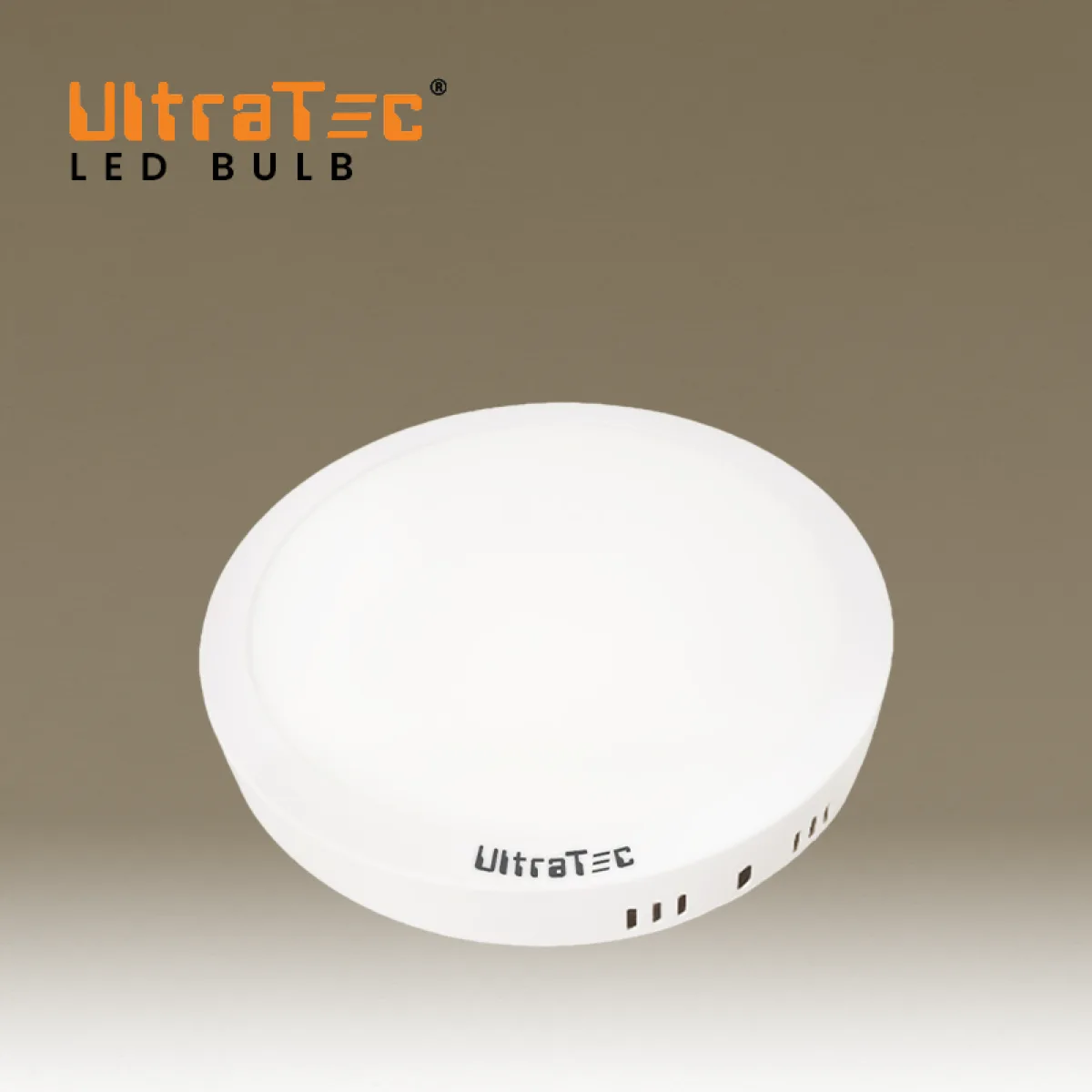
LED panel lights are flat fittings that replace a bulb holder.
- Recessed panels sit flush inside a false ceiling. You need a ceiling cavity and a cut-out of the right size.
- Surface panels screw directly onto a concrete or plaster ceiling and stand slightly proud of it. This is the practical choice for most Nepali homes with RCC slab ceilings and no false ceiling.
Our ULTRATEC panels come in 6W, 12W, 18W and 24W, round or square. As a guide, 6W suits a passage or bathroom, 12W a bedroom, and 18 to 24W a living room or office.
6. Tube lights
LED tube lights replace old fluorescent tubes. The 4 ft 20W size is the standard for rooms, kitchens and shops, and the 2 ft 10W suits cupboards, mirrors and small spaces. Batten versions with a frame are quicker to install because the fitting and tube come together.
7. Street and compound lights with sensors
For gates, compounds, parking areas and roads, LED street lights in 50W and 100W cover most needs. Models with a sensor switch on at dusk and off at dawn by themselves, so nobody has to remember the switch and the light never burns through the day. A separate photo sensor can add the same dusk-to-dawn switching to an existing outdoor light.
Quick checklist
- Base: E27 screw or B22 pin.
- Colour: warm 3000K for relaxing rooms, cool 6500K for work areas.
- Wattage: matched to the room size and use.
- AC mains or 12V DC for solar and battery systems.
- Recessed panels need a false ceiling; surface panels do not.
For the bigger picture on cutting your lighting bill, read our guide to energy-efficient lighting for Nepali homes. See every bulb, panel, tube and street light on the LED light price page, or contact us for bulk and project orders.