A refrigerator runs 24 hours a day for ten years or more, so buying the right size and type matters more than most appliance decisions. This guide covers how to size a fridge for a household, when a chest freezer is the better buy, and how to compare running costs from the spec sheet.
How many litres?
Fridge capacity is given in litres of storage. As a guide:
- Around 190 L: a couple or a family of up to three, or a student flat. Our ULTRA URS-PREMIUM 1900 is a 190 L single-door model in this class.
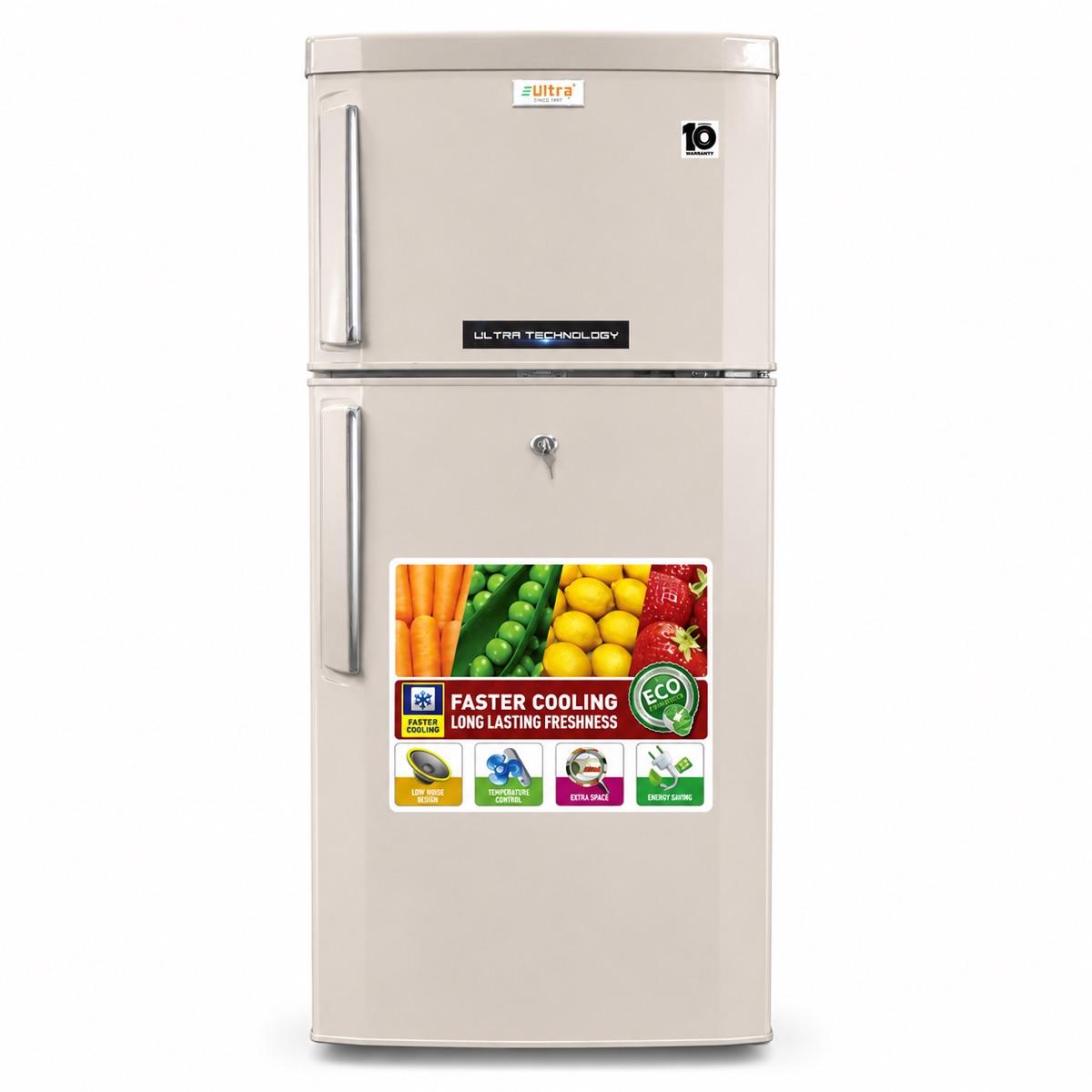
- Around 280 L: a family of three to five that shops weekly. Our ULTRA URD-PREMIUM 2800 is a 280 L double-door model.
- Larger households or homes that store a lot of frozen meat and vegetables often pair a fridge with a chest freezer rather than buying one very large fridge.
Single door or double door?
A single-door fridge has a small freezer compartment inside the main cabinet. It is compact and economical, but every time you open the door, the freezer section warms slightly. A double-door fridge separates the freezer, usually on top, with its own door, so frozen food stays colder and more stable and there is more freezer space. Both of our ULTRA models reach -18°C in the freezer and use manual defrost, which means you switch off and clear the ice occasionally. Manual defrost models are simpler and use less electricity than frost-free ones.
When to buy a chest freezer
A chest freezer is a top-opening box built purely for freezing. Because cold air sinks, very little escapes when you lift the lid, so it holds temperature well. It makes sense for:
- Shops, dairies and cold-drink sellers.
- Restaurants, hotels and canteens storing meat, momo fillings and ice.
- Large households that buy meat or vegetables in bulk.
Our chest freezers range from 300 L to 390 L gross capacity. The net, or usable, capacity is lower, for example 255 L net on the 300 L ULTRATEC BD-255 and 315 L net on the 370 L ULTRA BD-315, so compare net figures when you need a specific volume. The ULTRATEC 305 L model has a glass sliding top, which lets customers see the stock in a shop without opening the lid.
Comparing running costs: read the kWh/24h figure
Chest freezer spec sheets list power consumption in kWh per 24 hours, which is the number that decides your bill. Multiply it by 30 for a month. Among our models the listed figures range from 1.3 kWh/24h on the 300 L ULTRATEC BD-255 to 3.1 kWh/24h on the 390 L ULTRATEC UTSCF 328. As an illustration at Rs. 12 per unit (check your own NEA rate), that is roughly Rs. 470 a month versus Rs. 1,120 a month. A cheaper freezer with a higher kWh figure can cost more over its life than a slightly dearer efficient one.
The refrigerant is also listed. R600a, used in the BD-255, BD-315 and both ULTRA fridges, is a modern hydrocarbon refrigerant associated with efficient compressors and low environmental impact.
Placement and voltage
- Leave a gap of several centimetres behind and beside the unit so the condenser can release heat, and keep it out of direct sun and away from the cooking range.
- Keep a chest freezer level and on a firm floor; a full 370 L freezer is heavy.
- Our ULTRA fridges are specified by the manufacturer as not requiring a stabilizer. If your area has very unstable supply, ask us and we will advise for your location.
Compare every fridge and chest freezer on the refrigerator and freezer price page, or contact us for shop and restaurant orders with delivery.