Ask three people in Kathmandu which water purifier to buy and you will get three answers: RO, UV, or "just boil it". The right answer depends on one thing most people never check: what is actually in your water. This guide explains what each purifier type removes and how to match it to your water source.
Where Kathmandu's water comes from
Many valley homes mix several sources. KUKL or Melamchi line water is treated at source, but it can pick up dirt and germs in old pipes and rooftop or underground tanks. When line supply runs short, homes switch to tanker water or boring and well water, which varies a lot and is often hard, high in dissolved solids, or carries iron. A purifier has to handle the worst water you use, not the best.
What each purifier type does
- RO (reverse osmosis): pushes water through a very fine membrane that removes dissolved salts, hardness and many metals, as well as germs. It is the only common household type that lowers dissolved solids.
- UV (ultraviolet): a UV lamp kills bacteria and viruses. It does not remove dissolved solids, hardness, iron or chemicals, so it only makes sense on clear, low-TDS water, or as an extra stage after RO.
- UF (ultrafiltration): a membrane that filters out particles and germs without electricity. Like UV, it leaves dissolved solids untouched.
- Mineral or alkaline stage: RO strips minerals along with impurities, so a mineral cartridge after the membrane adds some back and improves taste.
Test first: the TDS meter
A TDS (total dissolved solids) meter is a cheap pen-shaped tester that reads in mg/L or ppm. Dip it in a glass of tap water from each source you use. As a rough guide, readings under about 300 are usually pleasant to drink once germs are dealt with, while readings well above that, and especially above 500, are a strong sign you need RO. A TDS meter does not detect bacteria, so low-TDS water still needs UV, UF or boiling.
Which one for your home
- Tanker, boring or well water: RO, ideally RO + UV with a mineral stage.
- Mixed line and tanker water: RO, because you have to plan for the tanker days.
- Only line water with a low TDS reading: UV or UF can be enough, though RO + UV covers you if your source changes.
- Water that stains buckets orange: RO plus a separate iron or sediment pre-filter on the main line, to protect the membrane.
Size it to your daily use
Capacity is listed as litres per hour of output and litres of storage. Family countertop units in our range give around 11.8 L/hour into a 7 to 12 L tank, which is plenty for drinking and cooking for a typical household. Offices, schools, hostels and restaurants are better served by high-capacity units producing around 63 L/hour into a 41.63 L tank. Buy for your actual daily drinking and cooking volume rather than paying for capacity you will not use.
Hot water and other features
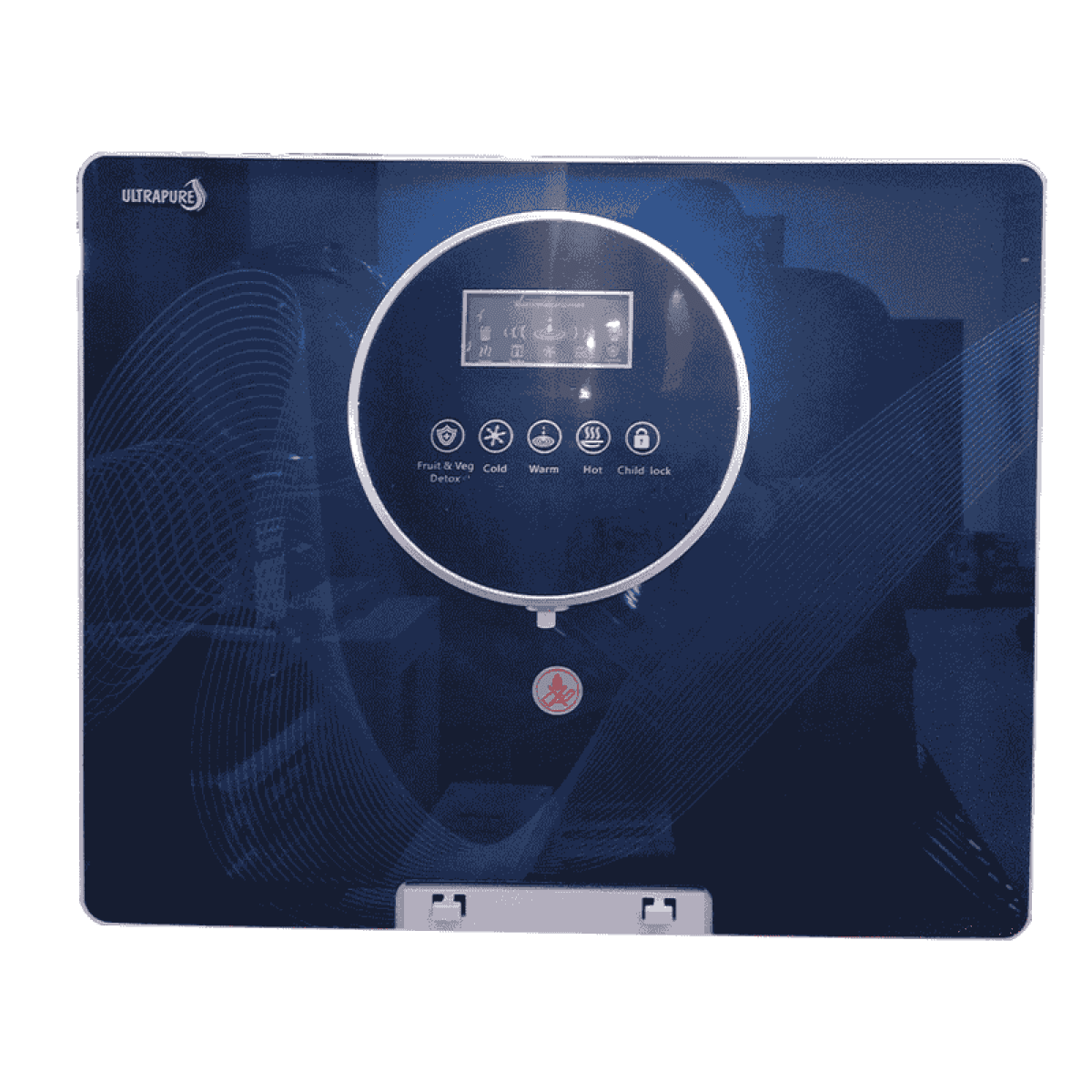
Some models add a heater for hot drinking water, hot-and-cold dispensing, a TDS display or voice prompts. These are conveniences, not purification upgrades. Spend on the right filtration first, then add features you will use every day. Hot-water models also need a socket that can take the heater's load.
About RO reject water
An RO purifier sends part of the incoming water down the drain as concentrate, carrying away the salts it removed. Many households collect it for mopping, washing vehicles or watering hardy plants rather than wasting it.
Filter care
Sediment and carbon filters and the RO membrane wear out. How fast depends on your water and use: hard, muddy or iron-heavy water clogs them sooner. Slower output or a change in taste is your cue to service the unit. We supply replacement filters and service purifiers we install.
Compare ULTRA and ULTRATEC mineral RO models, from compact family units to 63 L/hour office purifiers, on the water purifier price page, or contact us with your TDS reading and we will recommend a model.